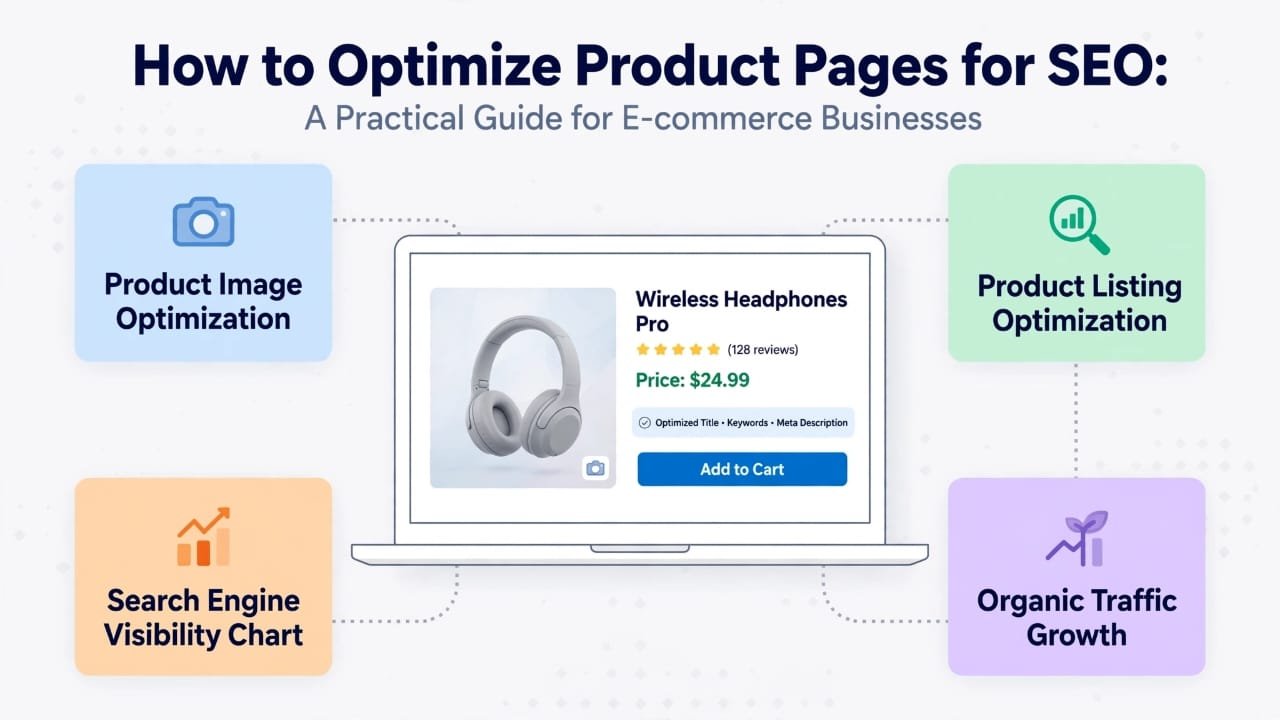
How to Optimize Product Pages for SEO
Product pages play an important role in e-commerce SEO. Well-optimized pages help search engines understand your products and help potential customers find them through relevant searches. From keyword research to technical improvements, each element contributes to a stronger product page.
1. Conduct Product Keyword Research
Identify the search terms customers use when looking for your products. Focus on relevant keywords that describe the product, its features, material, brand, or intended use.
Use the primary keyword naturally in the product title, description, and relevant headings. Include related terms where they improve clarity, but avoid keyword stuffing.
2. Optimize Product Titles and Headings
Product titles should clearly describe the item and include important details where relevant.
For example:
- Weak title: Shoes
- Improved title: Men's Lightweight Running Shoes
Use a clear main heading and organize additional information with appropriate subheadings. Make sure each product page has a distinct, descriptive title that accurately represents the product.
3. Write Unique Product Descriptions
Product descriptions should explain the product's features, specifications, benefits, and intended use.
Avoid copying manufacturer descriptions without adding useful information. Explain what makes the product relevant to customers and answer common questions about its size, material, compatibility, or care requirements.
Use relevant keywords naturally while keeping the description accurate and easy to read.
4. Optimize Product Images
High-quality product images help customers evaluate products and can support visibility in image search.
- Use descriptive image file names.
- Add accurate alt text to meaningful images.
- Compress images to reduce loading time.
- Use suitable image dimensions and formats.
- Ensure images display properly on mobile devices.
Alt text should describe the image rather than repeat a list of keywords.
5. Optimize URLs and Meta Tags
Create readable URLs that describe the product.
Example URL:
/products/mens-running-shoes
Write a unique SEO title and meta description for each important product page. Include the main product topic naturally and make the description useful to potential visitors.
Google may generate a different title or search snippet depending on the query, so ensure the page content accurately represents the product.
6. Improve Internal Linking
Connect product pages with relevant category pages, related products, and useful articles.
For example, a running shoe product page might link to running socks or a guide to choosing running shoes.
Use descriptive anchor text and link only to relevant pages. A logical internal linking structure helps visitors navigate the store and helps search engines discover related content.
7. Improve Page Speed and Mobile Usability
Product pages should load efficiently and work smoothly across devices.
Optimize images, reduce unnecessary scripts, and ensure that product details, prices, and purchase buttons are easy to access on mobile screens.
Use Google PageSpeed Insights to identify performance issues and potential improvements.
8. Implement Product Structured Data
Product structured data helps search engines understand information such as product names, prices, availability, and ratings when applicable.
Ensure the structured data matches the information displayed on the page. Correct implementation may make a product eligible for enhanced search appearances, but it does not guarantee them.
9. Manage Out-of-Stock Products
Keep product availability information accurate.
For temporarily unavailable products, communicate their status and provide relevant alternatives where useful. For permanently discontinued products, decide whether to retain the page or redirect it based on its value and the availability of a suitable replacement.
Avoid deleting product pages automatically without considering their traffic, links, and usefulness.
10. Monitor SEO Performance
Use Google Search Console to monitor impressions, clicks, search queries, click-through rate, and indexing issues.
If a page receives impressions but few clicks, review its search title, description, and relevance to the queries it appears for. If a page is not receiving impressions, investigate indexing, content relevance, and competition.
Use performance data to identify areas that need improvement.
Conclusion
Effective product page SEO combines relevant keyword research, descriptive titles, unique product descriptions, optimized images, internal links, and sound technical practices.
Review your product pages regularly, keep product information accurate, and make improvements based on actual performance data. A well-optimized product page helps search engines understand your content while giving potential customers the information they need.