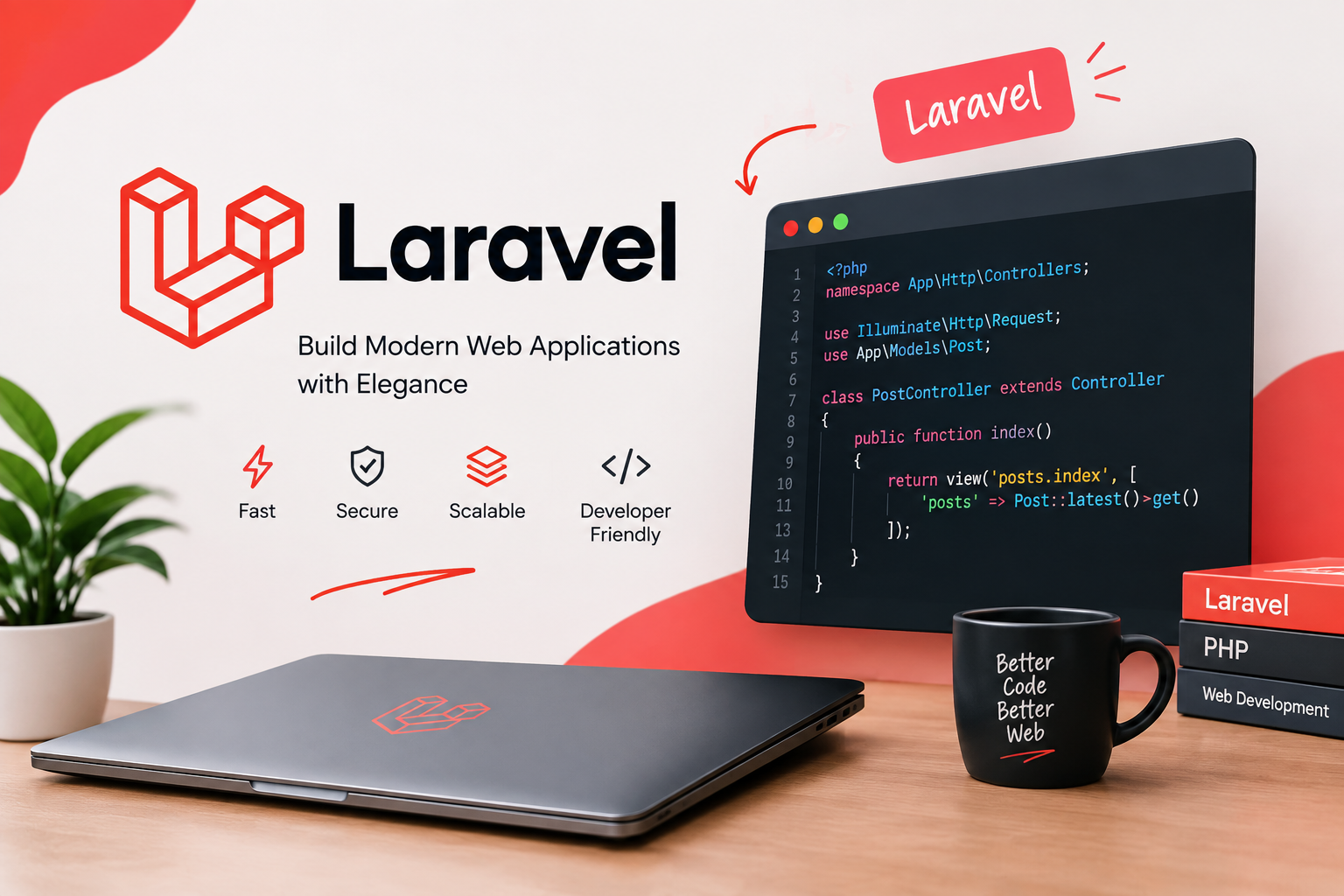
What Is Laravel Development? A Beginner's Guide
Ever wondered why so many websites you use every day feel fast, secure, and just... well-built? There's a good chance a PHP framework called Laravel is working quietly behind the scenes. If you've been asking yourself what is Laravel development and whether it's worth learning in 2026, you're in the right place. This guide breaks down everything from the basics to career prospects, without the jargon overload.
What Is a Laravel Developer, Exactly?
Let's start simple. A Laravel developer is someone who builds web applications using Laravel, an open-source PHP framework known for its clean syntax and developer-friendly tools. But what is a Laravel developer beyond the job title? In practice, this person handles everything from database design and routing to authentication and API integration. They write code that's organized, testable, and easy to maintain, which is exactly why businesses love hiring them.
Unlike developers who write raw PHP from scratch, Laravel developers rely on built-in features like Eloquent ORM, Blade templating, and Artisan commands to speed up development without sacrificing quality.
Why Use Laravel for Web Development?
There are dozens of frameworks out there, so why does Laravel keep winning developers over? For starters, it strikes a rare balance between simplicity and power. The framework comes with built-in solutions for common headaches, routing, sessions, caching, and security, so teams spend less time reinventing the wheel.
Another reason many businesses lean toward Laravel for web development is its massive ecosystem. Tools like Laravel Forge, Laravel Nova, and Laravel Sail make deployment, admin panels, and local environments almost effortless. Add to that a huge, active community, regular updates, and solid documentation, and you've got a framework that scales from small business websites to enterprise-grade platforms.
Course Overview: What You'll Actually Learn
A well-structured Laravel course typically walks you through:
PHP fundamentals (a quick refresher if you're new to the language)
MVC architecture how models, views, and controllers work together
Routing and middleware for handling requests
Eloquent ORM for working with databases without writing raw SQL
Blade templating to build dynamic, reusable views
Authentication and authorization systems
RESTful API development for connecting with mobile apps or third-party services
Testing and debugging using PHPUnit
Deployment basics so your project actually goes live
Good courses don't just throw theory at you, they include hands-on projects like building a blog, an e-commerce store, or a booking system, so you leave with something real for your portfolio.
Who Is This Course Best Suited For?
This isn't just for aspiring developers. It's genuinely useful for:
Beginners with some basic PHP or programming knowledge who want a structured path into backend development
Frontend developers looking to go full-stack
Freelancers who want to offer more valuable, backend-capable services to clients
Business owners who want enough technical understanding to communicate better with their development team
Career switchers eyeing tech roles with strong demand and decent pay
How to Become a Laravel Developer
If you're wondering how to become a Laravel developer, the path isn't as complicated as it seems. Start with solid PHP fundamentals, then move into Laravel-specific concepts like Eloquent, routing, and middleware. From there, build small projects, a to-do app, a simple CRM, a portfolio site, before tackling something more ambitious. Contributing to open-source Laravel projects or freelancing on small gigs also builds real-world confidence fast. Consistency matters more than speed here; most developers get job-ready within four to six months of focused practice.
Career Scope and Opportunities
Laravel remains one of the most in-demand PHP frameworks globally, and that demand isn't slowing down. Startups love it for rapid MVP development, while established businesses often turn to a laravel development company for scalable, secure enterprise applications. This means job opportunities span everything from small agencies to large-scale laravel development services providers handling complex, multi-client projects.
Career paths include backend developer, full-stack developer, API specialist, and eventually solution architect or technical lead roles. Salaries are competitive, remote opportunities are abundant, and the skill pairs well with complementary tools like Vue.js or React for full-stack versatility.
Frequently Asked Questions
1. What is Laravel development used for?
It's used to build web applications, APIs, and complex backend systems, everything from simple business websites to large-scale platforms.
2. Do I need prior programming experience to learn Laravel?
Basic familiarity with PHP and general programming logic helps a lot, though many courses include a refresher for beginners.
3. How long does it take to become job-ready?
Most learners reach a job-ready level in four to six months with consistent, hands-on practice.
4. Should I hire a laravel development company or build in-house?
It depends on your budget and timeline, agencies offer speed and specialized expertise, while in-house teams offer more long-term control.
5. What makes Laravel development services different from generic web development?
These services focus specifically on Laravel's ecosystem, meaning faster builds, better security practices, and easier long-term maintenance.
Ready to Get Started?
Laravel isn't just another framework to add to your resume,it's a genuinely practical skill that opens doors across freelancing, agency work, and full-time employment. If you're ready to stop wondering and start building, enroll in the course today and take your first real step toward a backend development career.