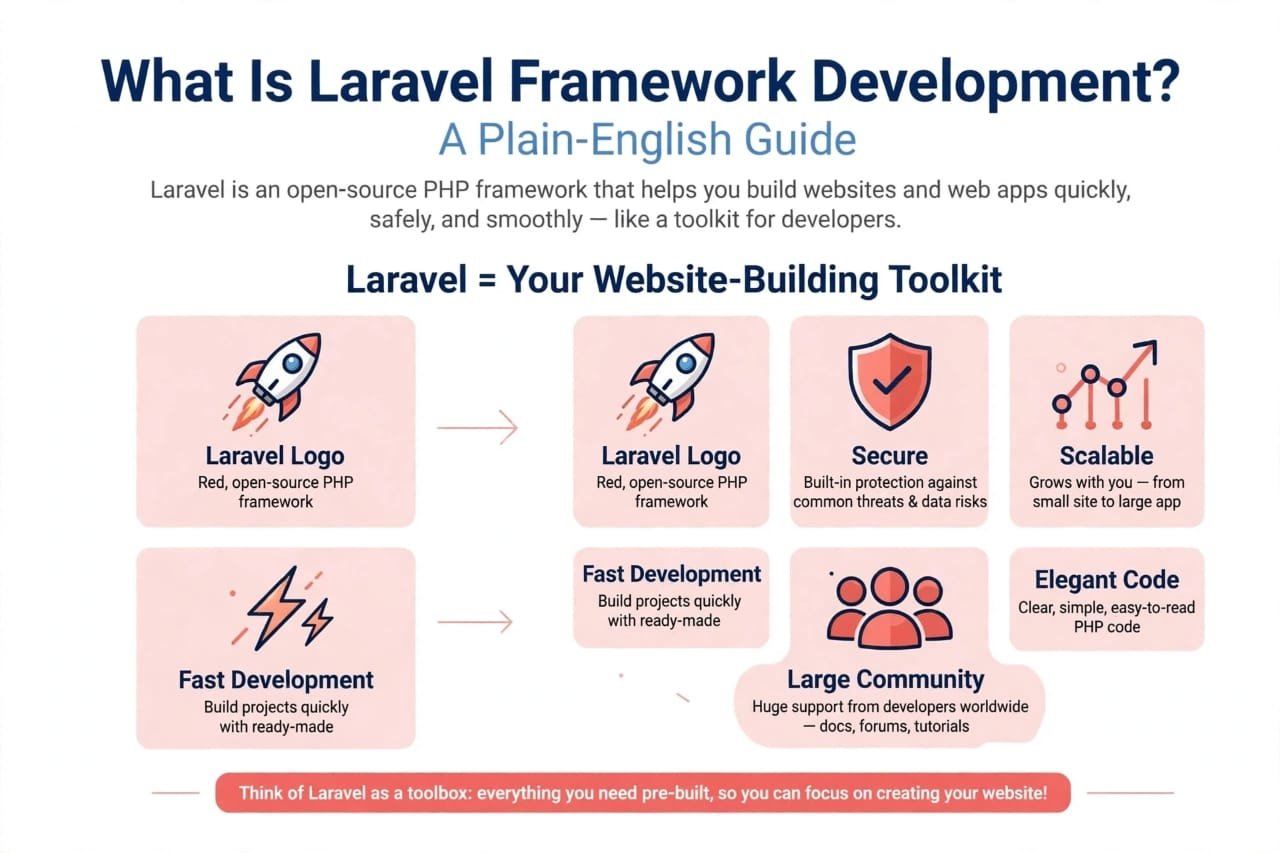
Laravel development means building web applications using Laravel, a PHP framework that handles the repetitive parts of coding — database connections, user logins, routing, security — so a developer can focus on the actual product. If you searched this term, you are probably trying to decide one of two things: what it would cost to get a Laravel project built, or whether you should learn Laravel yourself instead of hiring someone. This article covers both.
What Laravel development actually involves
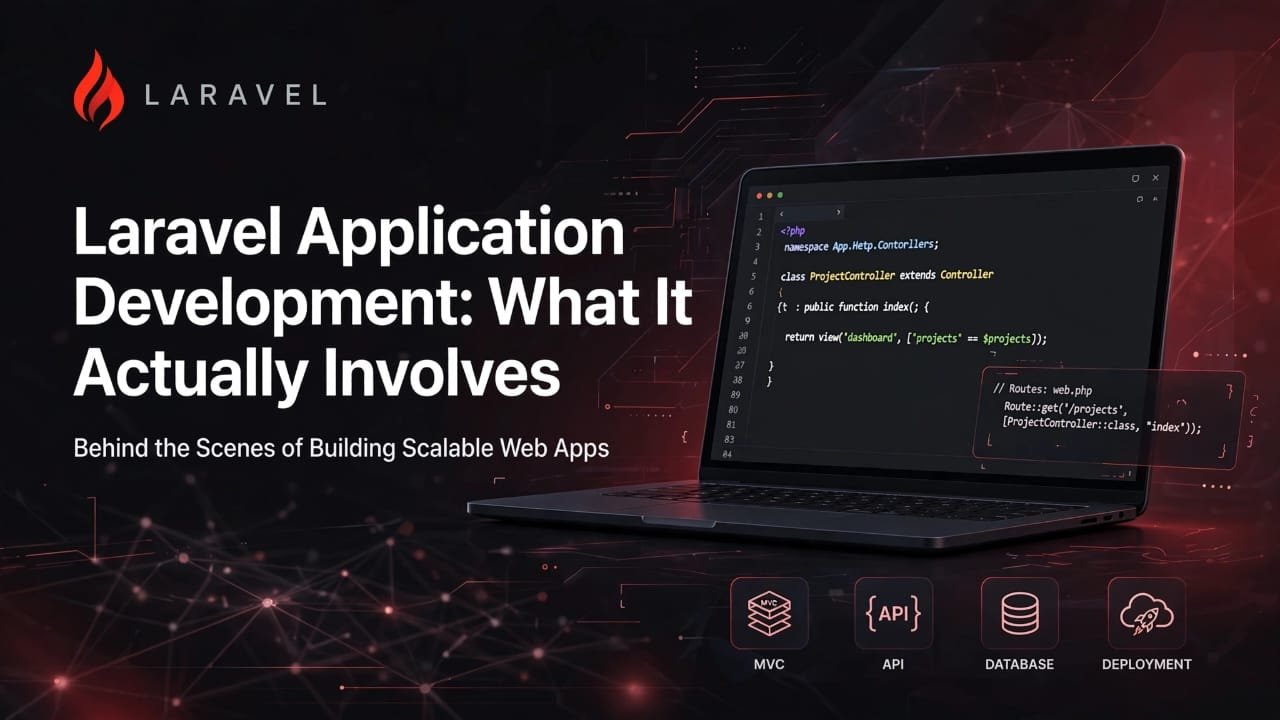
A typical Laravel project moves through a few stages, whether it is done by a freelancer, an agency, or a student building a portfolio piece:
- Planning the database structure (what information the app needs to store and how it connects)
- Building the backend logic — user accounts, permissions, payments, search, whatever the app needs to do
- Connecting a frontend (often a simple Blade template, sometimes a separate React or Vue interface)
- Testing and fixing bugs
- Deploying the app to a live server
None of this is exotic. It is the same core process behind most business websites, admin panels, booking systems, and e-commerce backends you use every day. Laravel is popular because it gives a developer sensible defaults for all five stages, so a one-person team can build something that would otherwise need five people.
If you are looking to hire Laravel development
If you run a business and searched this term hoping to get something built, a few honest points before you contact anyone:
A simple Laravel project — a basic admin panel, a small booking tool, a straightforward internal system — is a few weeks of work for a competent developer. Anything with payments, multiple user roles, real-time features, or integrations with other services takes longer. In Pakistan, freelance Laravel developers typically price projects individually rather than by a fixed rate card, so get two or three quotes and ask each one to break down what is included, because "Laravel development" can mean a weekend script or a six-month platform.
Ask to see finished projects, not just a portfolio page. A developer who can show you a live admin panel they built, with the login details to look around, is worth more than one who only has screenshots. And get a rough idea of what happens after launch — who fixes bugs, who pays for server hosting, whether support is included or billed separately. These are the questions that separate a smooth project from a frustrating one.
If you are thinking about learning it yourself
This is where most people land once they look into it properly, and it is a reasonable path — Laravel is one of the more learnable frameworks precisely because it was designed to reduce the amount of raw PHP you need to write by hand.
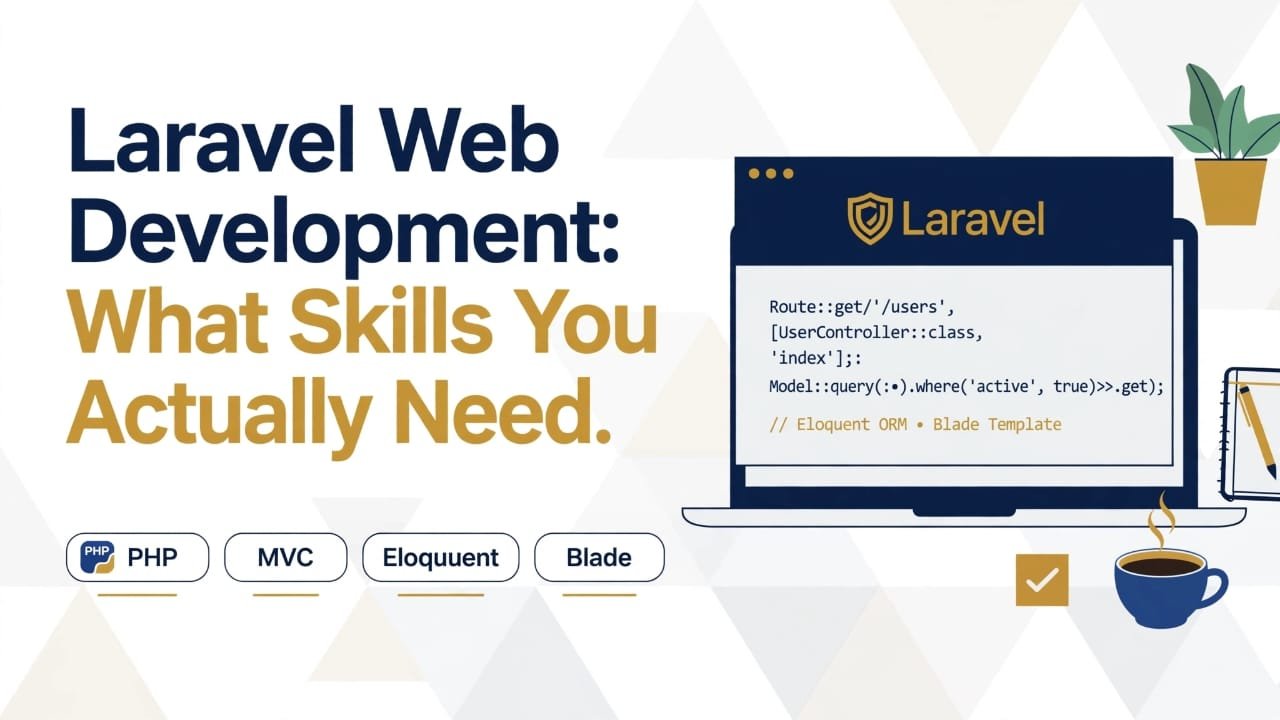
What actually helps is sequencing. Jumping into Laravel without basic PHP first usually backfires — you end up copying code you do not understand and getting stuck the first time something breaks. A realistic path looks like this: core PHP fundamentals (variables, functions, how a server processes a request), then databases and MySQL, then Laravel itself — routing, Eloquent (how Laravel talks to the database), authentication, and finally a complete project you build from scratch rather than just follow along with.
That last part matters more than people expect. Watching tutorials feels like progress, but the skill only sticks once you have built something yourself, hit an error with no video to copy from, and worked out why. Give yourself a real, if modest, goal — a small booking system, a simple shop, a members-only content site — and build it start to finish.
How long it realistically takes
There is no single honest number here, because it depends on how much time you put in daily and whether you already know PHP. As a general range: someone starting from basic PHP, studying consistently, can usually reach the point of building simple independent Laravel projects within a few months. Reaching a level where you would feel confident taking on paid freelance work or an entry-level job typically takes longer and depends heavily on how many real projects you have actually finished, not just watched.
What speeds this up more than anything else is having someone to ask when you get stuck. Self-taught learners often lose weeks to a single error that a more experienced developer could explain in two minutes. This is also one reason structured, live classes work better for a lot of people than a pile of free YouTube tutorials — not because the free material is wrong, but because nobody is there when you hit the wall at midnight with a blank terminal and load-shedding about to kill your internet anyway.
A quick way to decide
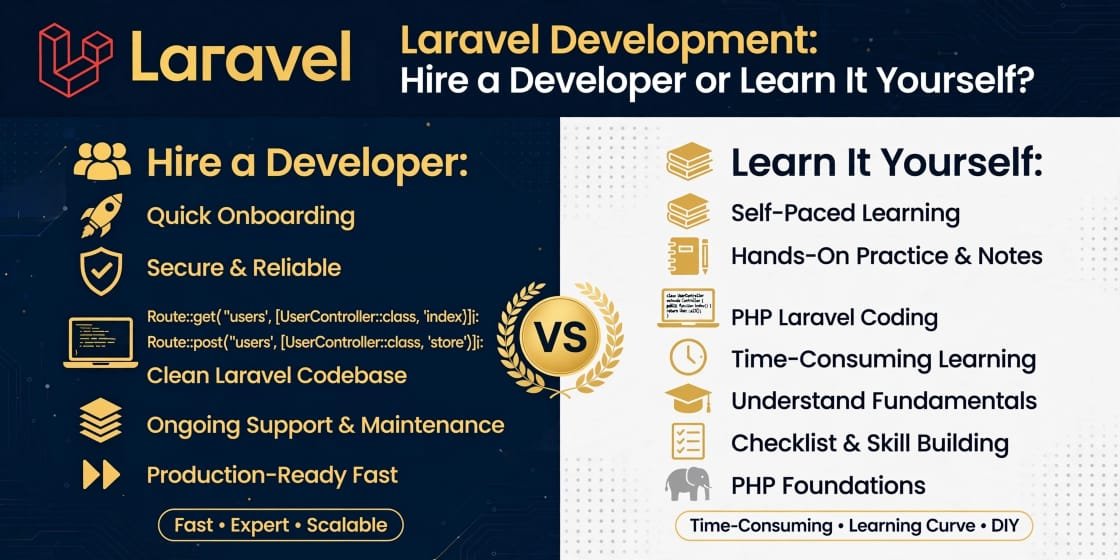
- Need something built soon, and it is not your core skill → hiring makes sense. Get multiple quotes and see real, working examples first.
- Want this to become a skill you can use for freelancing or a job → learning it is worth the time, especially since PHP and Laravel are still widely requested on Fiverr and Upwork and by Pakistani companies.
- Not sure yet → start learning the basics anyway. Even a rough understanding of what Laravel does makes you a far better client if you end up hiring someone later, and it costs you nothing but time to find out if you enjoy it.
If you decide to learn it properly, structure helps more than motivation alone. Our Laravel Development batches run live on Zoom, built around real projects rather than just lecture videos, so you can ask a question the moment your code breaks instead of sitting with it for a week.
Whichever way you go, the one mistake to avoid is treating "Laravel development" as a single fixed thing. It covers everything from a two-day script to a platform that takes a team months. Knowing roughly where your own project sits on that scale is what makes the rest of the decision easy.