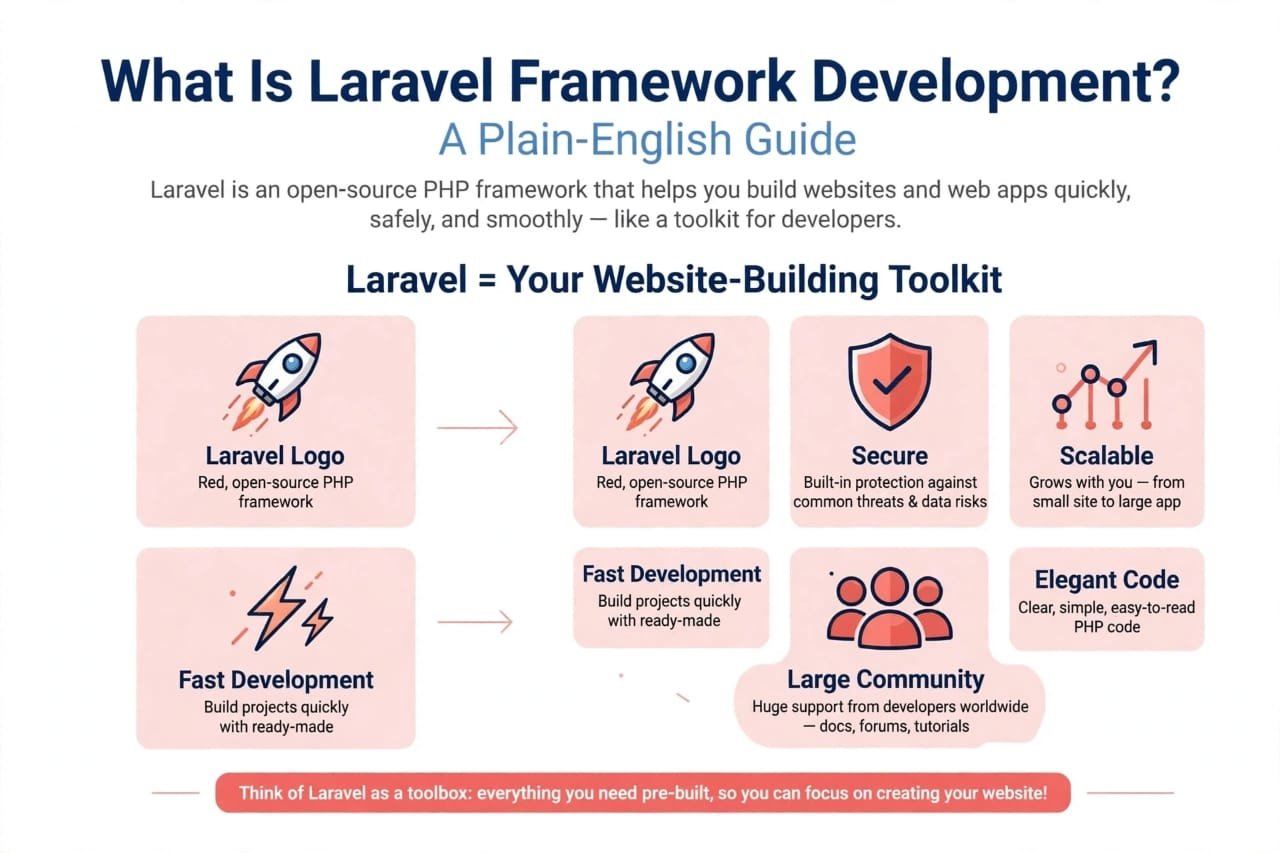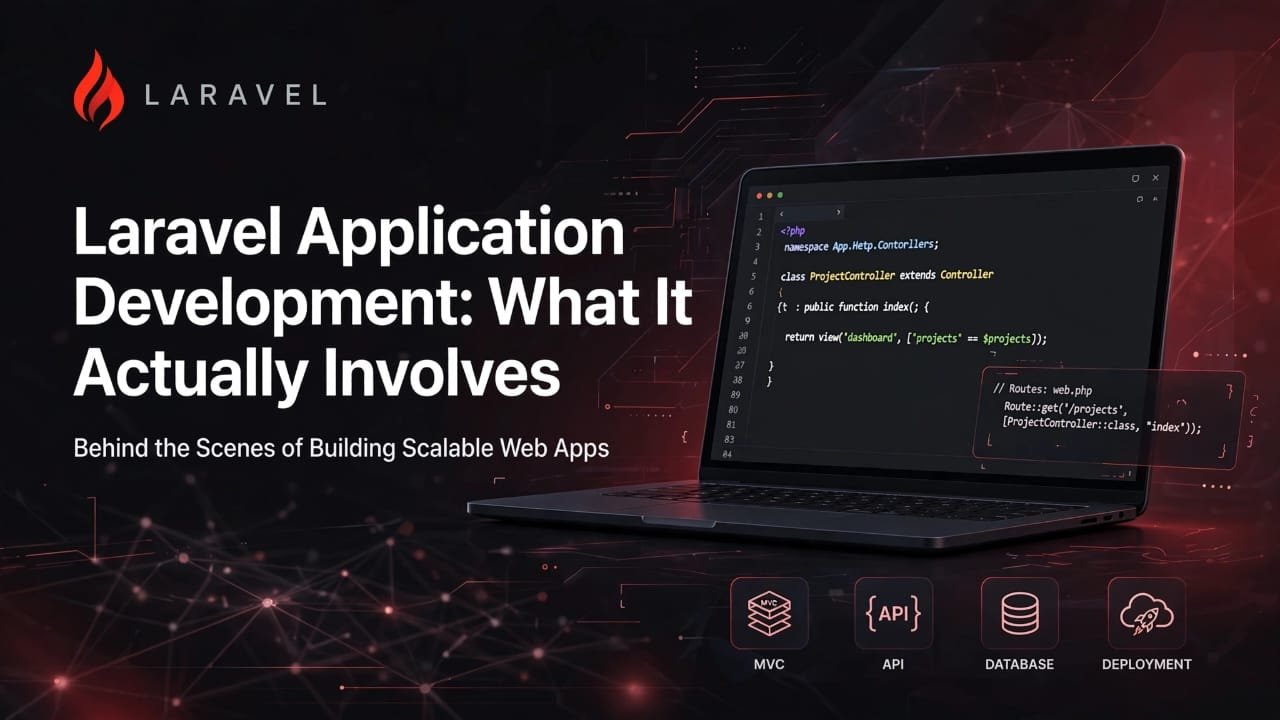
Laravel web development means building websites and web applications using Laravel, a PHP framework that handles the repetitive, error-prone parts of coding — database connections, user logins, security, routing — so a developer can focus on the actual features of the site. If you are thinking about this as a skill to learn, it is not one thing but a stack of smaller skills: PHP itself, databases, front-end basics, and then Laravel on top. None of it is out of reach for a beginner, but it does take structured practice, not just watching videos.
What Laravel Web Development Actually Involves
A Laravel project is still, underneath, a website or web app — something that takes a request from a browser, does something with data, and sends back a page or an answer. What Laravel adds is structure: a standard way to organise code, built-in tools for logins, forms, file uploads, sending emails, and talking to a database, and a large ecosystem of ready-made packages for things like payments or search. This is why so many companies in Pakistan and abroad ask for Laravel specifically when they post a web developer job — it is fast to build with once you know it, and easy for another developer to pick up your code later.
It is worth being clear about one thing: Laravel is not a shortcut around learning to code. It is a framework for PHP, so you still need to understand PHP, how a web page actually works, and how a database stores information. Laravel removes the boring, repetitive parts — it does not remove the learning curve of programming itself.
The Skills You Need, In Order
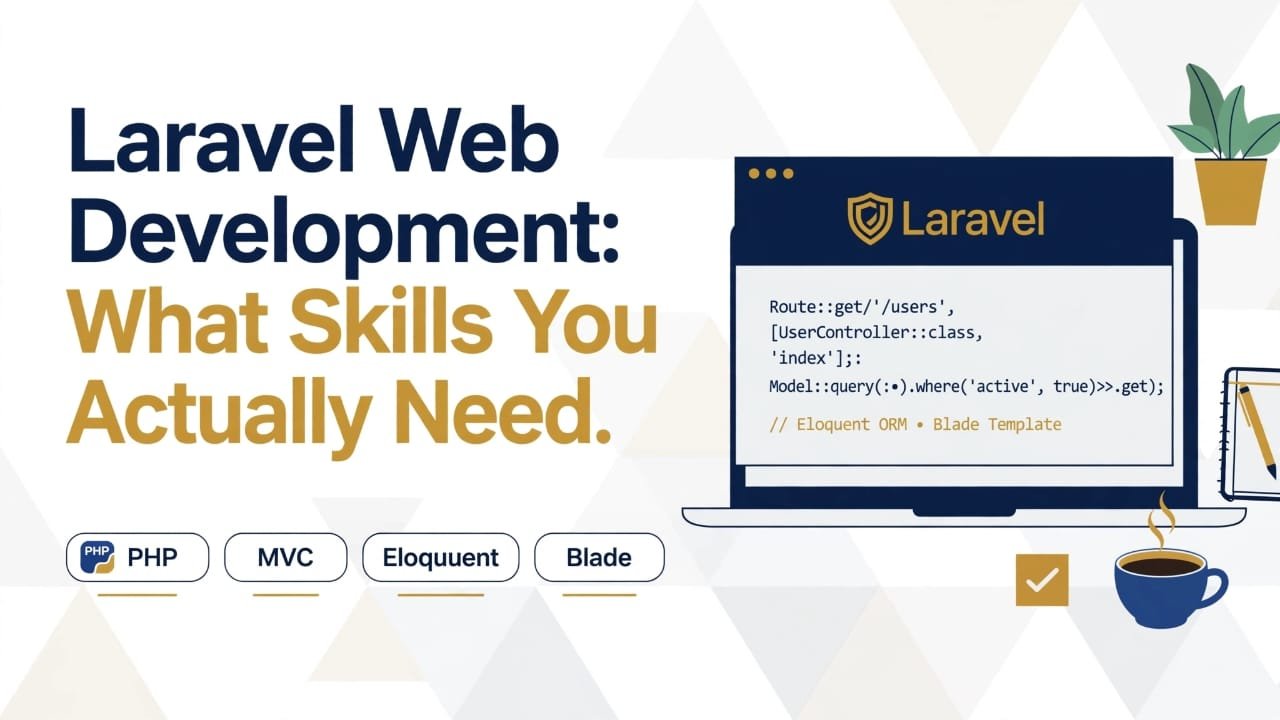
Most people try to jump straight to "learning Laravel" and get stuck, because the gaps are usually further back. A sensible order looks like this:
- HTML and CSS — how a web page is structured and styled. This is where everyone should start, even if it feels slow.
- Basic JavaScript — enough to understand how a page responds to clicks and form input, even if you are not aiming to be a front-end specialist.
- PHP fundamentals — variables, loops, functions, arrays, and how PHP talks to a web server. This is the part people try to skip, and it is the part that causes the most confusion later.
- MySQL and databases — how data is stored in tables, and how to write basic queries. Laravel will write a lot of this for you once you know it, but you need to understand what it is doing.
- Laravel itself — routing, controllers, Eloquent (how Laravel talks to the database), Blade templates, and authentication. This is also where you learn Git, because real Laravel work is almost never done without version control.
- Deployment basics — getting a Laravel project onto a live server, which has its own small learning curve around environment files, permissions and hosting.
Trying to learn Laravel before PHP is the single most common reason people give up. The framework's helpful shortcuts look like magic until something breaks, and then you need the PHP underneath to understand why.
How Long It Realistically Takes
There is no fixed number of weeks that applies to everyone — it depends on how much time you can give it each day, whether you already know some programming, and how consistently you practise rather than just watch. As a rough sense of scale: getting comfortable with HTML, CSS and PHP basics usually takes longer than people expect, often a few months of regular practice for someone starting from zero. Reaching a point where you can build a working Laravel project on your own — a blog, a small booking system, a simple e-commerce page — generally takes a further stretch of consistent, hands-on coding rather than passive learning.
The honest version is this: anyone who promises you will be "job-ready in two weeks" is not being straight with you. What actually moves people forward is building real, small projects early and often, instead of collecting tutorials without finishing anything.
What You Can Build With Laravel
Once the basics are solid, Laravel covers a wide range of real work:
- Business websites with admin panels for the owner to manage content
- Booking and reservation systems
- Simple e-commerce stores
- Internal tools for a company — attendance systems, inventory trackers, client portals
- APIs that power a mobile app's backend
This range is part of why Laravel skills hold their value in the Pakistani freelance market as well as in local jobs — agencies and small businesses regularly need exactly these kinds of projects built, and Laravel is efficient enough that a small team, or even one developer, can deliver them.
Is It Worth Learning in Pakistan?
Web development remains one of the more practical skills to learn here, partly because the work can be done over Zoom or a laptop regardless of which city you are in, and partly because clients paying in dollars through Payoneer are a realistic option once you have a portfolio, not just local rupee-paying clients. That said, it suits people who enjoy problem-solving and don't mind sitting with a bug for an hour until it clicks — if that sounds exhausting rather than satisfying, it is worth being honest with yourself before committing months to it.
A slow, stable internet connection and the usual load-shedding in parts of the country are real practical obstacles, not minor ones — a mobile hotspot as backup and a laptop that can handle a local development environment are worth sorting out before you start, not after you are three weeks in and frustrated.
A Practical Takeaway
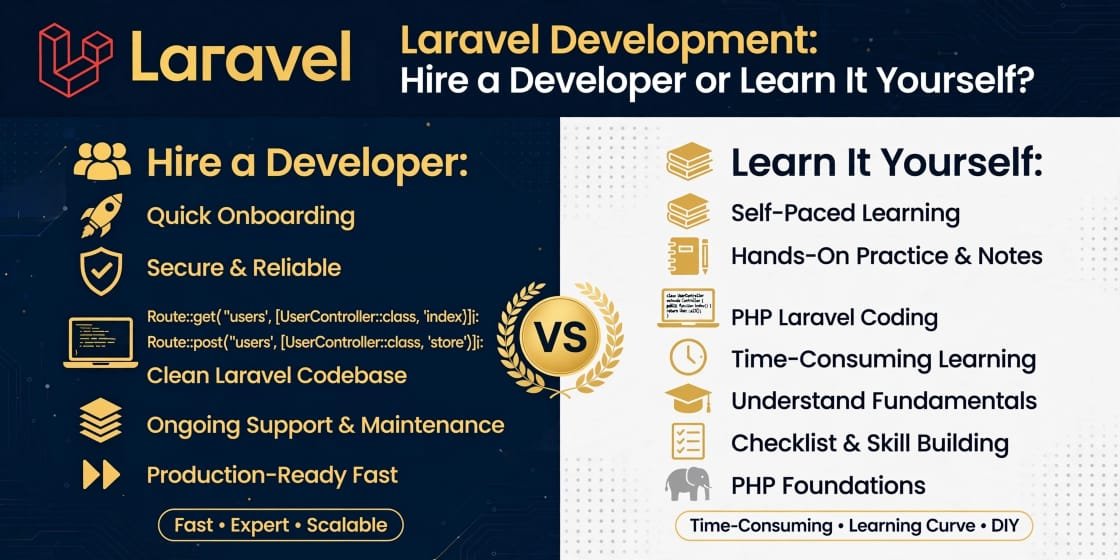
If you are serious about Laravel web development, don't start by searching for "Laravel course" — start with PHP basics and a small HTML page, and only move to Laravel once you can build a simple PHP script that reads from a database on your own. Build something small and finish it, even if it's ugly, before starting the next tutorial. If you'd rather have a structured path and someone to ask the moment you get stuck on an error message at 11pm, our Laravel and web development batches run live on Zoom, which covers exactly that gap between watching a video and actually being able to build.